
Description
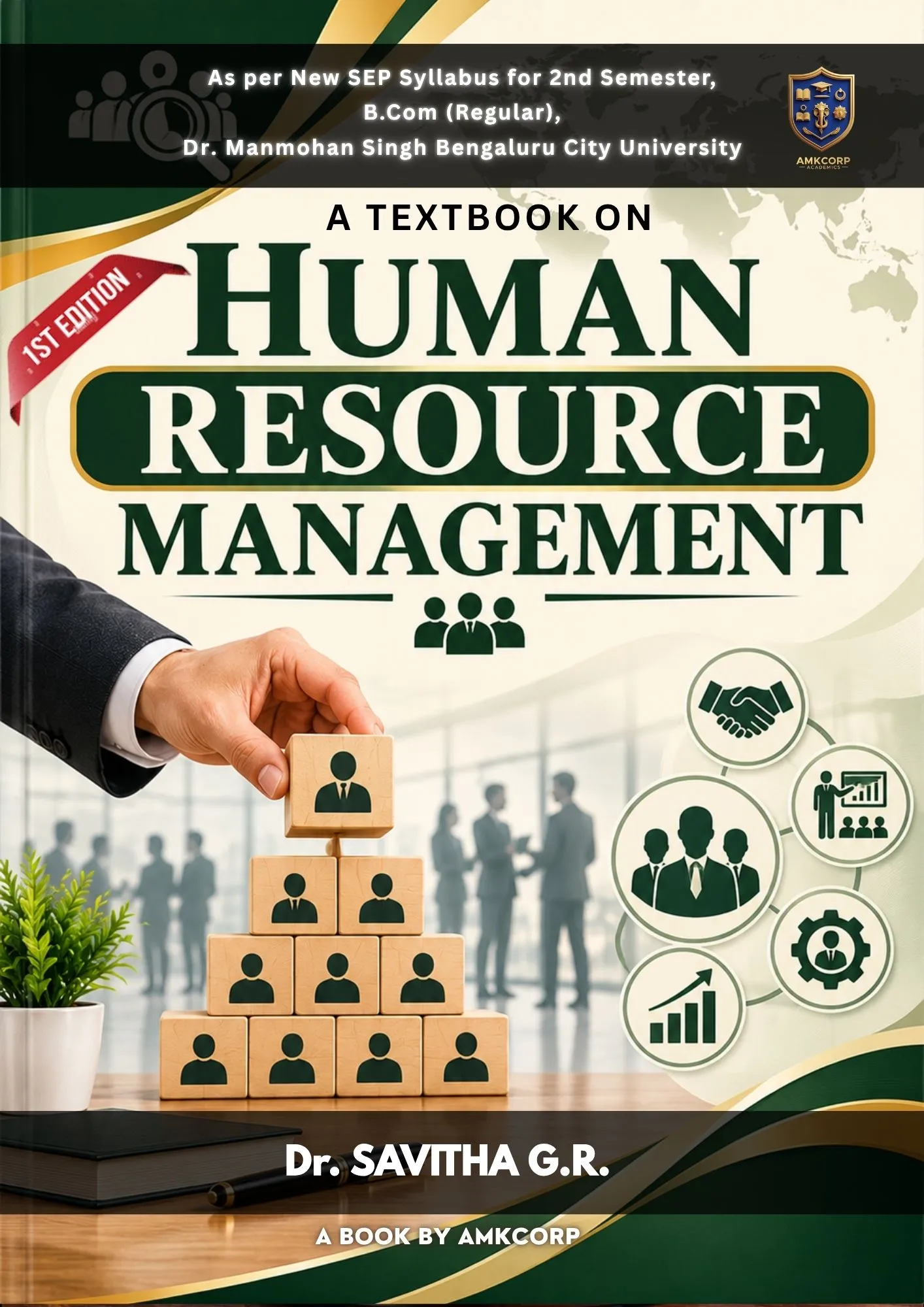
Human Resource Management is a comprehensive and learner-oriented textbook designed to provide students with a clear, systematic, and practical understanding of the principles and practices of Human Resource Management (HRM). Developed in accordance with the prescribed curriculum for the Bachelor of Commerce (B.Com. – Regular) programme, the book presents the subject in a structured manner that combines conceptual foundations with practical organisational applications.
Human resources constitute one of the most important elements of every organisation. Financial resources, technology, infrastructure, and information systems can support organisational activities, but it is people who transform plans and resources into meaningful results. Their knowledge, skills, creativity, commitment, adaptability, and ability to work collectively have a direct influence on organisational effectiveness. In this context, Human Resource Management extends far beyond routine personnel administration. It encompasses the systematic management of people throughout their organisational journey—from workforce planning and recruitment to development, performance management, compensation, career growth, employee relations, and eventual separation.
This book introduces students to HRM as an administrative, developmental, and strategic function. It explains how effective human resource practices can help organisations attract suitable talent, develop employee capabilities, improve performance, motivate and retain employees, maintain constructive workplace relationships, and respond to changing organisational and environmental requirements. The book also recognises that modern HRM is increasingly influenced by technological developments, artificial intelligence, HR analytics, flexible working arrangements, changing employee expectations, workforce diversity, employee well-being, and the growing importance of continuous learning.
The content of the book is organised into five comprehensive units, following a logical progression of HRM concepts and practices.
Unit 1: Introduction to Human Resource Management establishes the conceptual foundation of the subject. It explains the meaning, definition, features, objectives, importance, functions, and process of HRM. It also examines the role and responsibilities of the HR Manager and introduces major trends influencing contemporary HR practices. The unit helps students understand why HRM is not merely an administrative responsibility but an important contributor to organisational effectiveness and long-term growth.
Unit 2: Human Resource Planning, Recruitment and Selection examines how organisations identify their present and future workforce requirements and subsequently attract and select suitable employees. The unit covers the importance and process of Human Resource Planning, factors affecting HRP, recruitment methods and sources, factors influencing recruitment, the selection process, evaluation of selection procedures, barriers to effective selection, and steps for establishing an effective selection system. It emphasises the connection between workforce requirements, recruitment, and appropriate employee selection.
Unit 3: On-boarding, Training, Development and Career Planning focuses on the employee’s journey after appointment. It explains how effective onboarding helps new employees understand their roles, workplace procedures, organisational culture, and expectations. The unit further distinguishes training from broader employee development and discusses the need, benefits, methods, and evaluation of training. It also introduces career planning and different forms of career progression, including horizontal, vertical, technical, managerial, and functional progression.
Unit 4: Performance Appraisal deals with the systematic assessment and improvement of employee performance. The unit explains the meaning, objectives, and process of performance appraisal and discusses both traditional and modern methods of evaluation. It also examines the uses and limitations of performance appraisal and highlights the growing importance of continuous feedback, employee development, communication, and future-oriented performance management.
Unit 5: Compensation Management examines how organisations design and manage employee compensation and reward systems. It covers the meaning and components of compensation structures, factors influencing employee compensation, monetary and non-monetary incentives, individual and group incentives, and the role of incentives as a component of Cost to Company (CTC). The unit also considers issues such as fairness, employee motivation, retention, organisational performance, and the importance of maintaining a balanced compensation structure.
A distinctive feature of this textbook is its emphasis on clarity, continuity, and practical understanding. The subject has been presented in accessible language so that students encountering HRM for the first time can develop a strong conceptual foundation without losing sight of the practical realities of organisations. The topics are arranged progressively, allowing learners to move from basic concepts to interconnected HR practices and contemporary organisational issues.
The book also encourages students to move beyond memorising definitions and theoretical descriptions. Skill Development Activities, case studies, application-based exercises, analytical questions, essay-type questions, and multiple-choice questions provide opportunities for learners to interpret concepts, analyse organisational situations, and apply HRM principles in practical contexts. The skill-based activities include observing organisational training practices, preparing performance appraisal charts, developing pay structures based on CTC, and identifying contemporary HR practices followed by organisations.
Another important feature of the book is its integrated approach to HRM. Human resource planning, recruitment, selection, onboarding, training, performance management, compensation, career development, employee relations, and retention are not treated as isolated activities. Instead, they are presented as interconnected elements of a broader human resource system. A weakness in one area can influence outcomes in another—for example, ineffective recruitment may increase training requirements, inadequate onboarding may delay employee adjustment, unclear performance expectations may affect appraisal, and inappropriate compensation may create retention challenges.
The book further acknowledges the changing nature of the workplace. Digital HR systems, artificial intelligence, people analytics, flexible work arrangements, employee experience, workforce diversity, well-being, continuous learning, and strategic workforce planning are increasingly shaping the role of HR professionals. At the same time, fundamental principles such as fairness, ethical conduct, effective communication, constructive feedback, employee development, appropriate recognition, and respectful treatment remain central to effective people management.
Thus, Human Resource Management is intended not merely as an examination-oriented textbook but as a learning resource that encourages students to understand the human dimension of organisations. It seeks to develop conceptual knowledge, analytical thinking, practical awareness, and an appreciation of the relationship between people and organisational performance.
The book will be particularly useful for B.Com. students, teachers, management learners, aspiring HR professionals, and readers seeking a structured introduction to Human Resource Management. By connecting fundamental concepts with organisational practices and contemporary developments, it aims to help learners understand how effective management of people can contribute to individual growth, organisational effectiveness, and sustainable organisational success.


Reviews
There are no reviews yet.