
Description
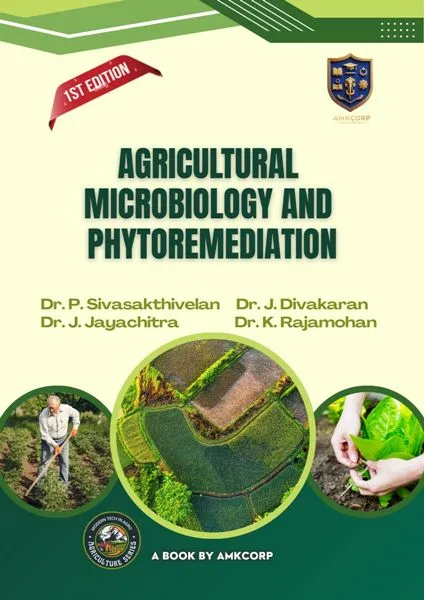
Agricultural Microbiology and Phytoremediation is a comprehensive and thoughtfully structured textbook designed to provide students, researchers, and agricultural professionals with a deep understanding of the microbial world and its profound impact on agriculture and environmental sustainability. This book bridges classical microbiological concepts with modern applications, presenting an integrated perspective on how microorganisms influence soil fertility, plant health, crop productivity, and ecological balance.
The book begins by laying a strong foundation in the basic principles of microbiology, exploring the historical development of the field and the major discoveries that shaped modern agricultural science. It gradually expands into microbial diversity, classification systems, and cell structure, enabling readers to understand the complexity and functional significance of bacteria, fungi, viruses, and other microorganisms in agricultural ecosystems. Clear explanations of microbial physiology, nutrition, metabolism, and genetics help readers appreciate how microorganisms grow, reproduce, and adapt to various environmental conditions.
A significant portion of the book focuses on soil microbiology and plant–microbe interactions, highlighting the dynamic relationship between roots and microorganisms in the rhizosphere. The text explains how beneficial microbes contribute to nutrient cycling, organic matter decomposition, nitrogen fixation, and solubilization of essential minerals such as phosphorus and zinc. The role of Plant Growth Promoting Rhizobacteria (PGPR) is discussed in detail, emphasizing their importance in sustainable agriculture and soil health improvement.
The book also addresses plant diseases and biological control strategies, offering insights into microbial pathogens, disease management principles, and the use of biocontrol agents and biopesticides as eco-friendly alternatives to chemical pesticides. In addition, readers are introduced to environmental and industrial microbiology, including fermentation technology, waste degradation, biogas production, and biodegradable plastics—demonstrating how microorganisms contribute to both agriculture and industry.
Food and water microbiology chapters emphasize food safety, preservation methods, waterborne pathogens, and microbial analysis techniques, ensuring a practical understanding of public health aspects. The section on laboratory techniques provides detailed knowledge of sterilization, culture media preparation, microscopy, isolation, and preservation of microorganisms, making the book suitable for academic coursework and laboratory training.
The final chapter focuses on bioremediation and phytoremediation, presenting innovative approaches to managing polluted soils using microbes and plants. It discusses recent advances in agricultural microbiology and outlines future prospects and challenges in the field. By combining theoretical concepts with practical applications, this book serves as a valuable academic resource and a guide for sustainable agricultural development.


Reviews
There are no reviews yet.