
Description
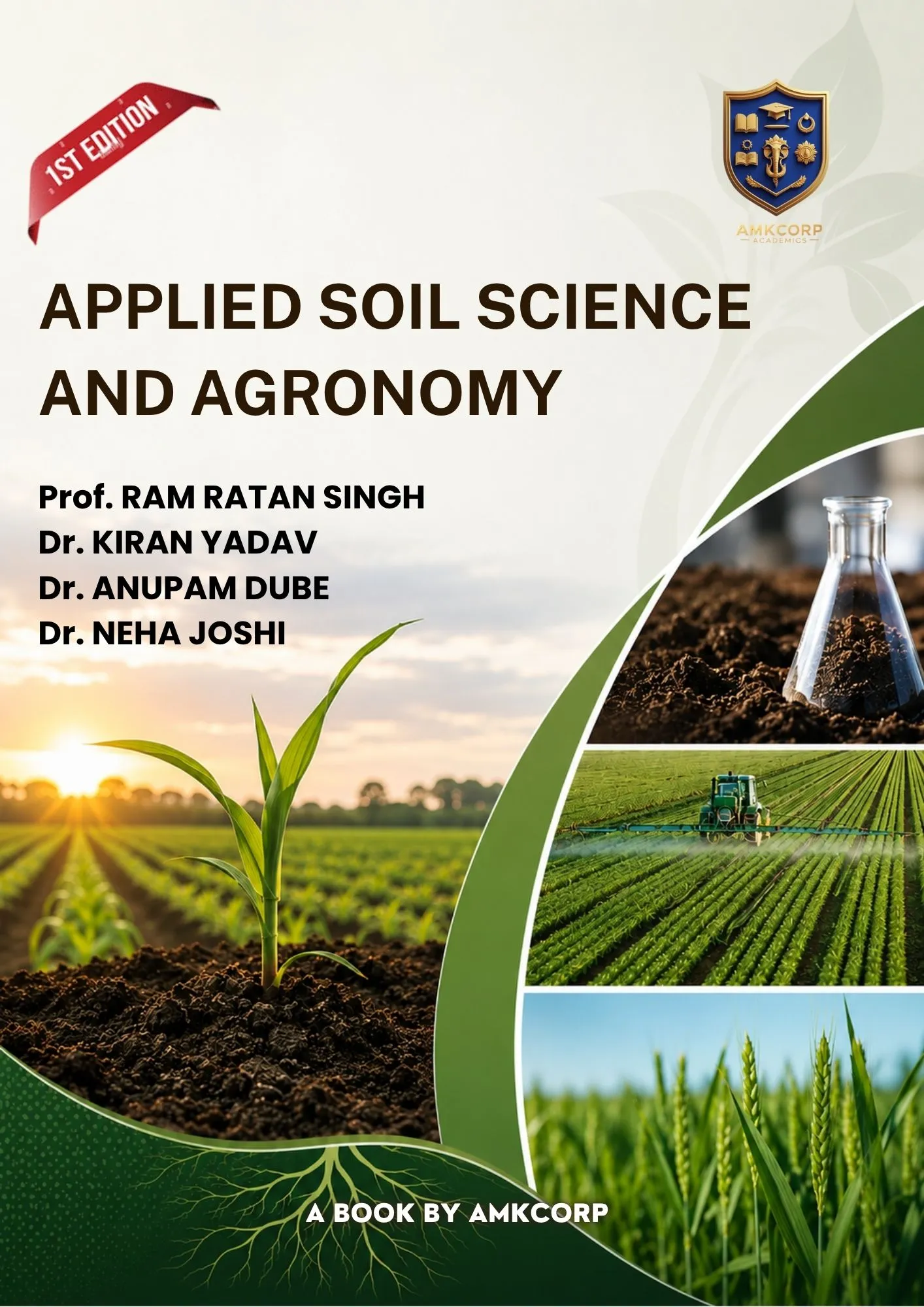
Applied Soil Science and Agronomy is a comprehensive academic resource designed to provide an in-depth understanding of modern agricultural science, soil management, crop production, and sustainable farming systems. The book integrates the fundamental principles of agronomy with emerging advancements in soil science, climate-smart agriculture, precision farming, and integrated resource management. It has been carefully structured to serve the needs of undergraduate and postgraduate students, researchers, agricultural professionals, extension workers, and competitive examination aspirants seeking both conceptual clarity and practical knowledge in agricultural sciences.
The book begins with the fundamentals of agronomy and traces the historical evolution of agricultural systems while emphasizing the significance of sustainable food production in the present global scenario. It discusses the role of agronomy in ensuring food security, improving productivity, and addressing the challenges posed by increasing population pressure and environmental degradation. The text further explores soil fertility, nutrient dynamics, and plant nutrition management, highlighting the importance of balanced nutrient supply and efficient soil management practices for sustainable crop production.
Special emphasis has been given to soil chemical properties, soil quality assessment, and the influence of salinity, sodicity, and organic matter dynamics on agricultural productivity. The book also addresses one of the most critical global concerns—climate change—and its impact on agriculture. It presents scientifically proven adaptation and mitigation strategies, climate-resilient farming practices, and the development of climate-smart agricultural systems that can sustain productivity under changing environmental conditions.
In addition, the book provides detailed insights into crop stress physiology and management by discussing both biotic and abiotic stresses affecting crop growth and yield. Practical agronomic approaches for managing drought, salinity, heat stress, and waterlogging have been elaborated with a focus on enhancing crop resilience and productivity. The concepts of agricultural meteorology and weather-based farm planning are also included to help readers understand the interaction between climate and crop growth for better agricultural decision-making.
The later chapters focus on sustainable agriculture, conservation farming, organic agriculture, integrated farming systems, and modern precision agriculture technologies such as GIS, GPS, remote sensing, automation, and digital agriculture. These chapters highlight the importance of resource conservation, ecological balance, and technological innovations in achieving efficient and environmentally sustainable farming systems. The final section of the book deals with crop production technologies and diversified cropping systems for cereals, pulses, oilseeds, and forage crops, thereby offering practical guidance for modern crop management.
Overall, this book bridges the gap between theoretical knowledge and field-level applications. With its systematic organization, updated scientific content, and practical orientation, Applied Soil Science and Agronomy serves as a valuable reference for academic learning, agricultural research, sustainable farming practices, and professional development in the field of agriculture.


Reviews
There are no reviews yet.