
Description
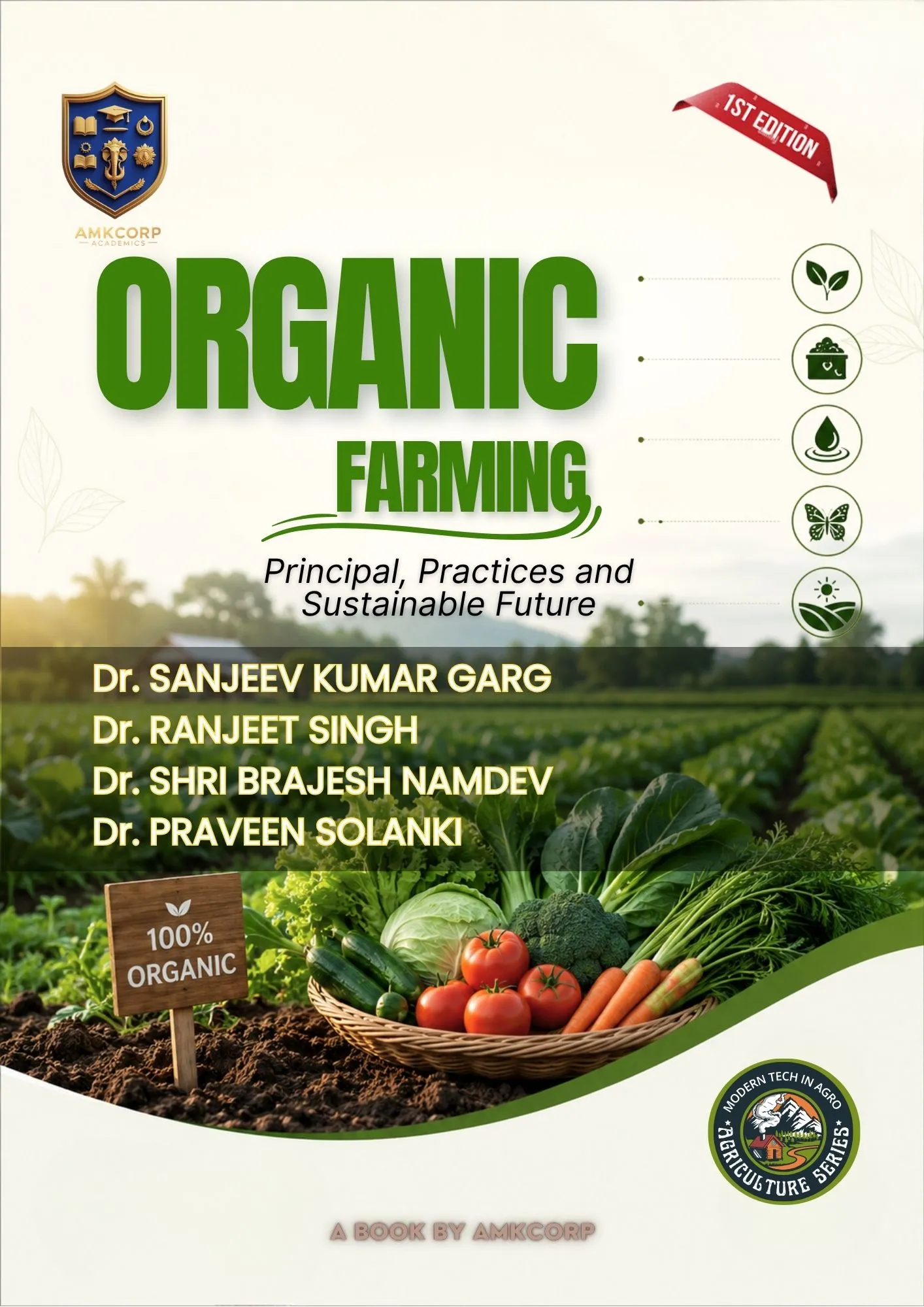
Organic Farming: Principles, Practices and Sustainable Future is a comprehensive and insightful textbook that explores the scientific foundations, practical approaches, and future prospects of organic agriculture in the modern world. The book is designed to provide students, researchers, academicians, agricultural professionals, extension workers, and competitive examination aspirants with a detailed understanding of organic farming systems and their role in sustainable agricultural development. By combining ecological principles with modern agricultural knowledge, the book highlights how organic farming contributes to environmental protection, soil health improvement, biodiversity conservation, and the production of safe and nutritious food.
The book begins with an introduction to the concept, history, evolution, and principles of organic farming, explaining its significance in achieving sustainable agriculture and ecological balance. It discusses both the global and Indian perspectives of organic agriculture, helping readers understand the growing importance of organic farming in response to concerns related to soil degradation, excessive chemical use, climate change, and food safety. Through systematic and reader-friendly explanations, the book establishes a strong conceptual foundation for understanding organic farming systems and their practical applications.
A major focus of the book is soil health and nutrient management, which are considered the backbone of successful organic farming. Detailed discussions on soil fertility, organic matter management, composting techniques, biofertilizers, humus formation, and nutrient cycling provide readers with valuable insights into maintaining long-term soil productivity without relying on synthetic fertilizers. Various composting methods such as vermicomposting and NADEP composting are explained scientifically and practically, emphasizing the importance of recycling organic waste for sustainable nutrient management.
The book further explores crop production techniques and agronomic practices suitable for organic farming systems. Important topics such as crop rotation, intercropping, mixed cropping, weed management, water management, and seed selection are discussed in detail to demonstrate how ecological farming practices improve crop productivity while maintaining environmental sustainability. Special attention has been given to organic plant protection strategies, including biological control methods, botanical pesticides, biopesticides, pest surveillance, and integrated pest and disease management approaches that minimize dependence on chemical pesticides.
Another significant aspect of the book is its coverage of organic horticulture, crop diversification, agroforestry, and livestock integration in farming systems. Readers are introduced to organic fruit and vegetable cultivation, organic spice production, protected cultivation systems, organic dairy farming, poultry management, manure recycling, and integrated farming approaches that enhance farm sustainability and profitability. The integration of crops and livestock is highlighted as an effective strategy for resource recycling and balanced farm management.
The book also provides detailed information on certification procedures, organic standards, labeling regulations, marketing systems, export opportunities, and government support schemes related to organic farming. Topics related to consumer demand, value addition, supply chain management, extension services, ICT tools, and adoption strategies help readers understand the socio-economic dimensions of organic agriculture. In addition, the final chapters explore climate change, sustainable development goals (SDGs), urban organic farming, technological innovations, and future challenges that will shape the future of organic agriculture globally.
Written in clear, systematic, and accessible language, this book successfully integrates theoretical concepts with practical applications and real-world relevance. Its structured chapter-wise presentation makes it highly suitable for academic study, research, agricultural training, and policy-oriented learning. Overall, the book serves as a valuable resource for promoting environmentally sustainable farming systems and encouraging the adoption of organic agriculture for a healthier and more sustainable future.


Reviews
There are no reviews yet.